
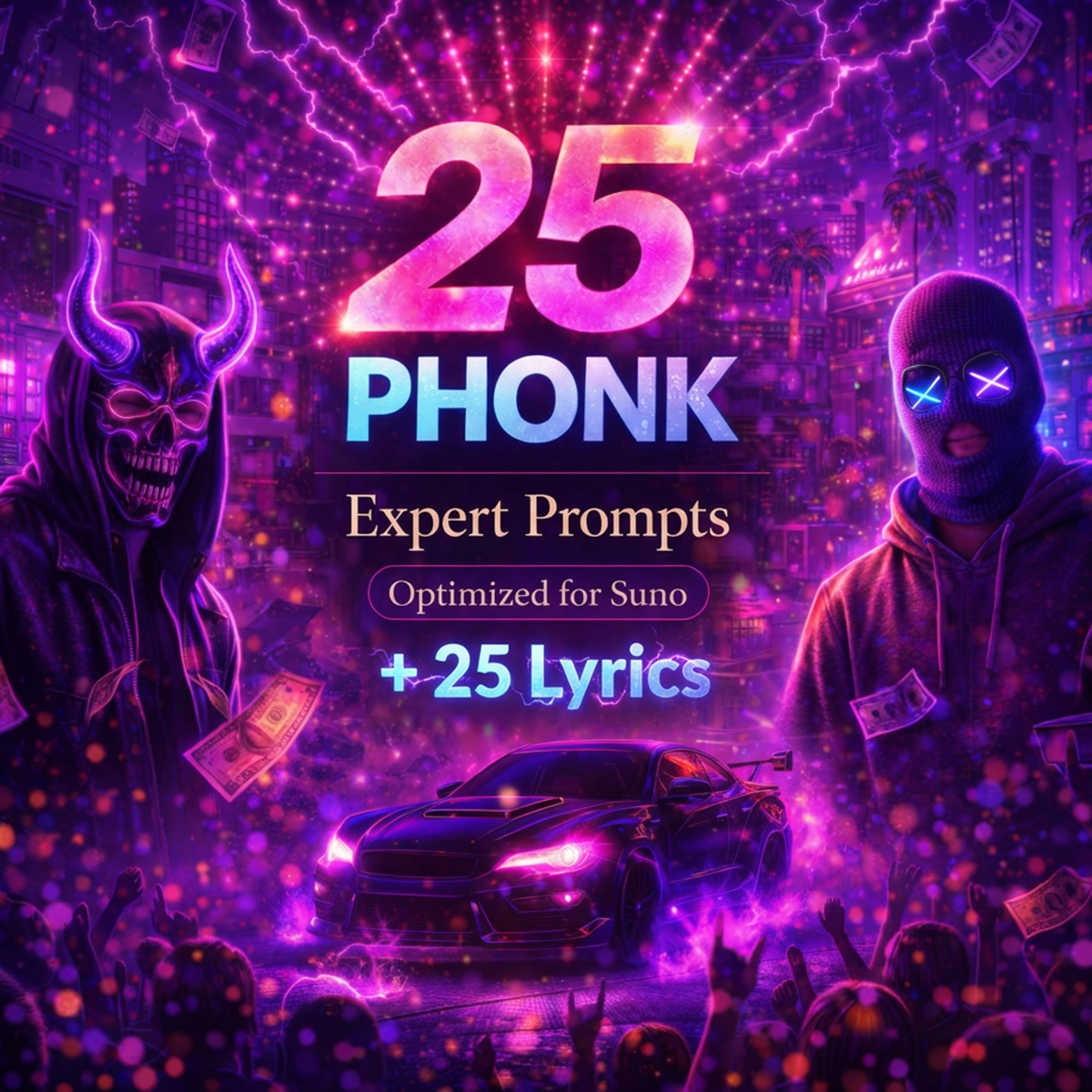
Phonk Prompts
If you want AI music to hit with real attitude, phonk prompts are one of the best places to start. Phonk is not just dark trap with distortion. It has its own pull: eerie cowbells, dirty low end, Memphis-inspired energy, drift mood, menace, swagger, and a rough texture that should feel intentional rather than messy. When the prompt is weak, the result usually loses that identity fast.
A lot of users run into the same problem. They type something broad like “dark trap beat” or “aggressive underground track,” and the output comes back sounding generic. It may be heavy, but it is not phonk. That is exactly why searches for phonk prompts, suno phonk prompts, and prompts for phonk keep making sense. People want better results, not more random tries.
Why Phonk Is Easy to Miss with Bad Prompting
Phonk has a very specific vibe. The mood is dark, but not empty. The beat is hard, but it still needs bounce. The sound is gritty, but it cannot collapse into noise. A good track should feel like motion, danger, and pressure all at once. If the wording does not point toward that balance, AI tools often drift into bland trap territory.
That is why phonk prompts matter more than generic beat prompts. The genre depends on recognizable details. Cowbell melodies, distorted 808s, tense atmospheres, chopped vocal feeling, underground street energy, and that unmistakable late-night drift tone all need to be implied in some way. Otherwise the generation may come out clean, flat, or just too safe.
In other words, phonk needs direction. Without it, the output rarely feels convincing.
Not Every Dark Beat Is Phonk
This is where a lot of users waste generations. Dark does not automatically mean phonk. Fast does not automatically mean phonk. Distorted does not automatically mean phonk. The genre has a specific personality, and that personality is exactly what strong prompts for phonk help create.
A useful prompt gives the AI a lane. It tells the model whether the track should feel more drift-heavy, more menacing, more hypnotic, more underground, or more cowbell-driven. That is a huge difference compared with tossing in a few mood words and hoping the result somehow lands in the right corner.
For Suno users especially, that extra clarity matters. Suno phonk prompts work best when they are tight enough to stop the sound from sliding into generic rap production or broad electronic darkness.
What Good Phonk Prompts Usually Capture
The best phonk prompts usually suggest more than genre. They suggest motion and environment. A good one might imply night driving, smoked-out streets, underground pressure, grimy basslines, hard cowbell hooks, distorted rhythm, or a dangerous late-night atmosphere with real momentum.
That is what gives the genre its replay value. It is not just about heaviness. It is about mood with edge. Phonk should feel raw, but it also needs to feel locked in. The beat has to ride. The texture has to feel deliberate. The attitude has to come through immediately.
This is why drift phonk prompts are such a useful sub-angle. They narrow the target even further. Instead of any dark phonk-style idea, the creator is pushing toward speed, tension, and a more cinematic driving feel. The more specific the intention, the more usable the output usually becomes.
Why This Genre Works So Well for AI
Phonk is actually a strong genre for AI music when the prompt is good enough. It relies on bold mood, repetitive energy, and strong sonic character, all of which can translate well in generation. But the catch is simple: broad prompts create weak results.
With better dark phonk prompts, creators can steer the music toward what listeners actually expect from the style. That means heavier identity, clearer atmosphere, and tracks that feel more focused from the start. Instead of endless trial and error, the user gets a more reliable way to chase the sound they want.
That is especially valuable if you are testing multiple ideas quickly, building prompt-based products, or trying to generate tracks that feel more niche and less disposable.
Who Is Looking for Phonk Prompts?
The audience here is not random. Some users want drift-style AI tracks because they like the sound and aesthetic. Others are creators using Suno who already know that generic trap prompts are not enough. Some want inspiration for darker instrumental ideas. Others are shopping for prompt packs because they are tired of wasting runs.
There is also a strong visual-content overlap. Phonk fits car edits, drift videos, gaming clips, night-drive visuals, underground reels, short-form hype content, and darker social edits. So when people search phonk prompts, they are often not looking for theory. They are trying to make something now.
That makes this a strong Etsy-style topic. The use case is obvious, the problem is real, and the solution is easy to explain: better prompts create better phonk.
A Prompt Pack Is More Useful Than Guesswork
A focused 25 Expert Prompts PDF helps because phonk has multiple lanes inside one strong identity. One prompt may lean darker and slower. Another may go harder into drift phonk prompts. Another may push more Memphis-inspired grit. Another may center the cowbell lead and the underground bounce.
That kind of variety matters. Good phonk prompts should not all sound like the same sentence with one adjective changed. They should help users explore different shades of the genre without losing the core feel.
That is where a proper prompt pack earns its value. It gives the user a stronger base, faster experimentation, and better genre consistency than trying to improvise every line from scratch.
Suno Users Need Tighter Input Here
People searching for suno phonk prompts usually already know what happens with weak wording: the output sounds close, but not close enough. It may be dark. It may even have some energy. But it misses the dirt, the menace, or the driving identity that makes phonk memorable.
A stronger prompt fixes that by narrowing the sound before generation starts. It helps guide the AI toward a more specific beat logic, a more useful emotional tone, and a clearer stylistic result. That saves time and usually means fewer throwaway generations.
For anyone building tracks regularly, having a small bank of prompts for phonk is just more practical than starting from zero every time.
Search Intent Is Strong
The keyword phonk prompts has good commercial intent because the search is action-based. People typing it are not looking for a history lesson. They are looking for a solution. They want better phonk outputs, better phrasing, and more reliable genre direction.
The same applies to drift phonk prompts, dark phonk prompts, and suno phonk prompts. These are creation keywords. That makes them strong targets for a digital prompt product because the buyer already understands the need.
They know the genre. They know the output is not there yet. They want the missing piece.
Choosing the Right Phonk Angle
Before using any prompt, it helps to know which side of phonk you actually want. Some tracks should feel sinister and slow. Others should feel faster, sharper, and more drift-oriented. Some need more cowbell focus. Others need more bass pressure and underground weight.
That is why prompt quality matters so much. A good phonk prompt does not just say “make phonk.” It points toward a version of phonk with a defined feel. If the goal is high-speed menace, drift phonk prompts make sense. If the goal is darker underground atmosphere, dark phonk prompts may be the better lane. If the main goal is better Suno outputs, then suno phonk prompts are the most practical focus.
The better the match between prompt and intention, the stronger the result usually sounds.
Final Thoughts
Strong phonk prompts help AI music creators get past generic dark beats and closer to something with real identity. They make it easier to generate tracks with grit, pressure, movement, and the kind of dirty atmosphere that gives phonk its appeal.
For creators using Suno or similar tools, a focused phonk prompt pack is a smarter move than endless broad experimentation. It saves time, sharpens the genre feel, and opens up multiple directions inside a style that depends heavily on tone and attitude.
If the output keeps sounding almost right but never fully phonk, the problem is usually not the genre. It is the prompt.


Leave a Reply